My thesis at NYU is a generative art installation that uses algorithms modeled after organic growth to draw paintings.
I also run a solo web design and development practice. Currently building fictional UIs for an indie horror film.
- PROJECTS + CLIENTS
- La Cima Charter School
- IDM@NYU Senior Project
- Finn Crawford
- Hunter Mathews
- Jenna Ferayo
- FORTH
- Redesigning Nutrition Facts
- Photography
Summary
Working directly with La Cima's Executive Director and school leadership, I led a full overhaul of the school's website, social media presence, and brand identity. I interviewed staff and teachers to surface the school's most pressing needs — keeping legally required documents up to date, simplifying content management for non-technical staff, and strengthening admissions outreach — and designed solutions across print and digital platforms to address them. In the latter half of my engagement, I shifted toward a media and marketing strategy, creating targeted ad campaigns delivered through Meta.
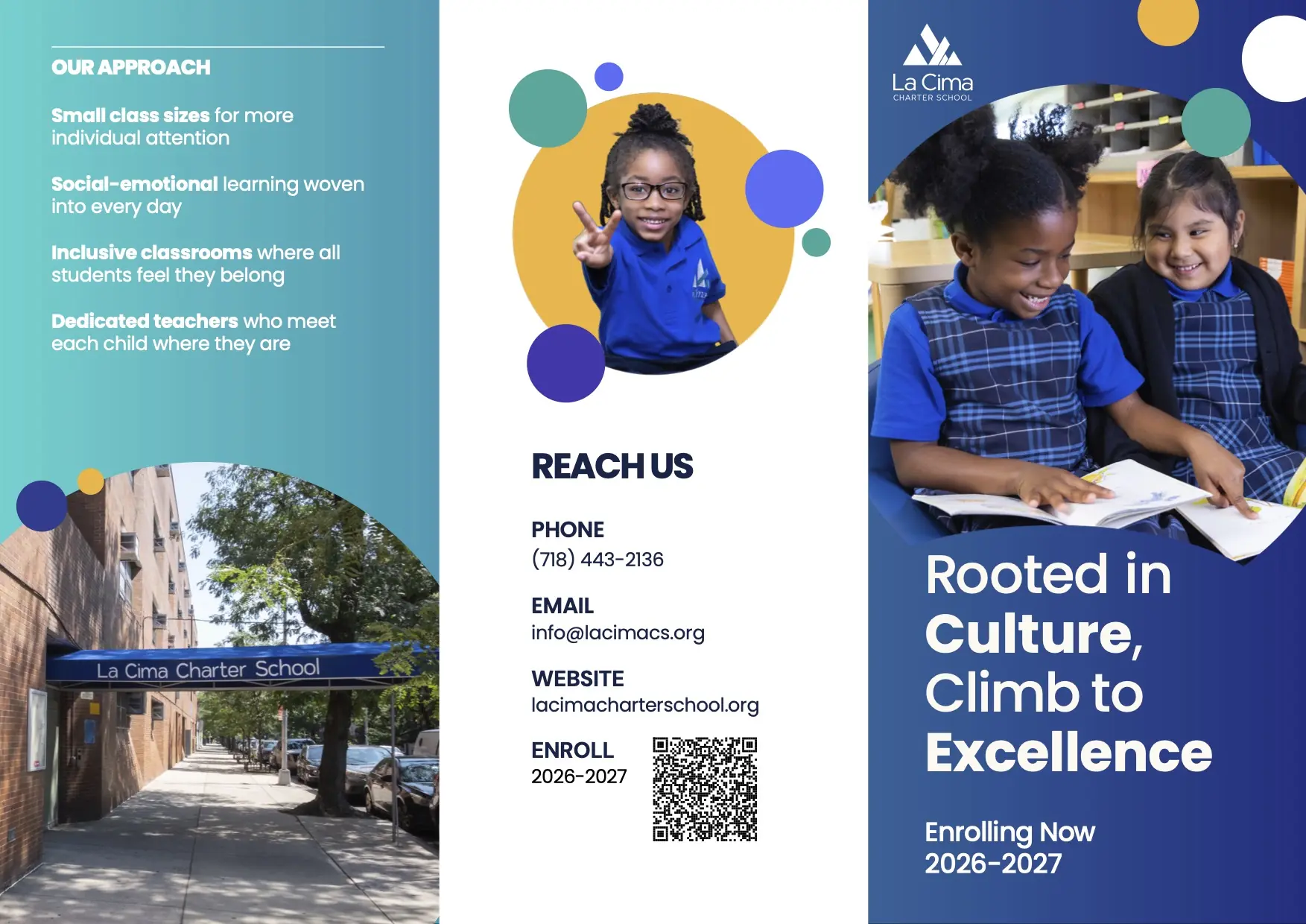
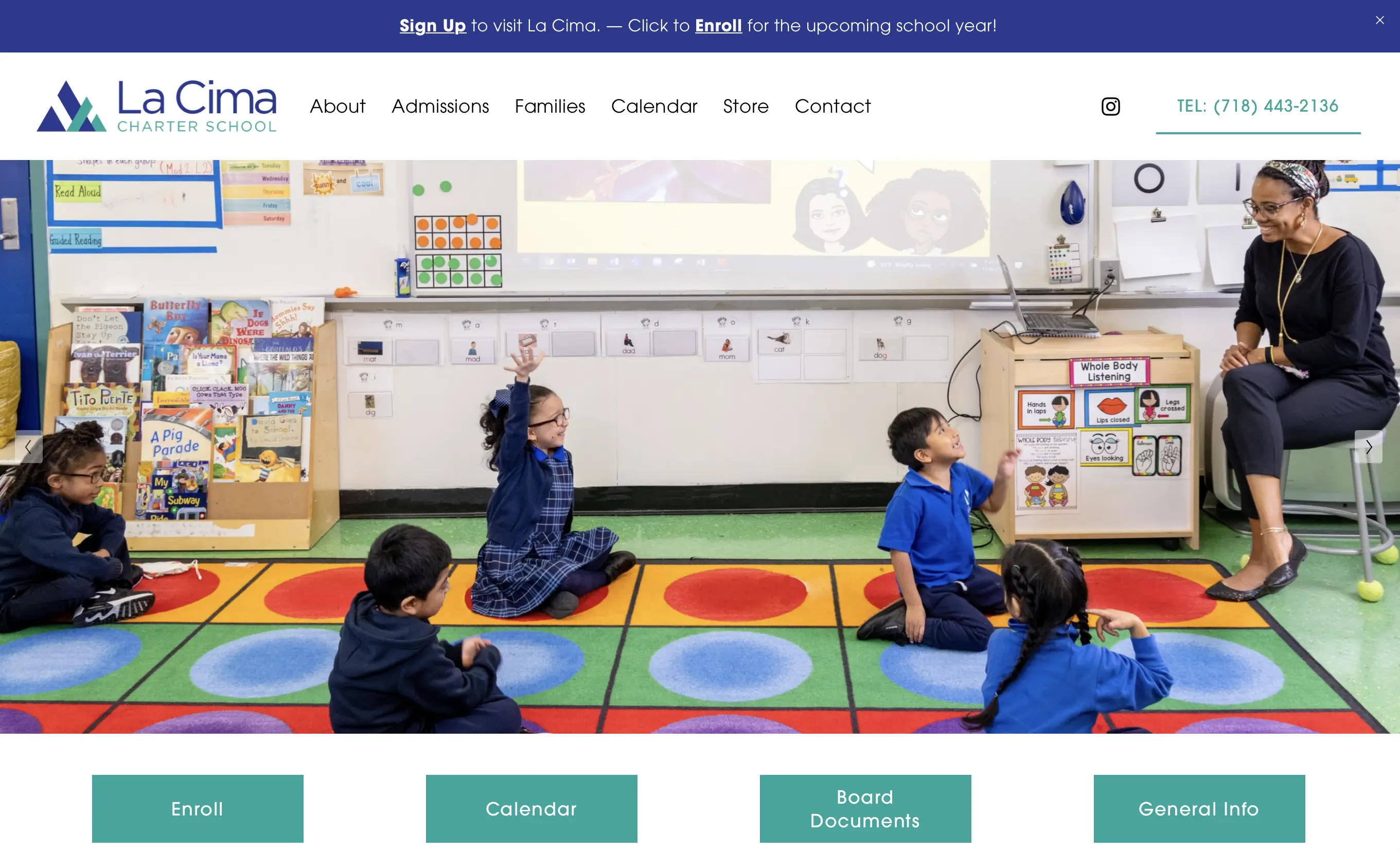
www.lacimacharterschool.org - redesigned landing page.
La Cima Charter School — Website Redesign
La Cima Charter School's website hadn't kept pace with the school. Staffing changes meant new administrators didn't know how to update it, admissions content had gone stale, and documents required by New York State law were overdue for revision. On top of those operational problems, the site needed a visual overhaul. I was brought in to fix all of it.
Preliminary Research
I surveyed dozens of school websites and identified two companies that dominate the market: Interactive Schools, which serves private schools across Europe and the U.S., and Educational Networks, a common choice for public school districts. Both offer a full suite of services — CMS, content creation, hosting, analytics, and maintenance. Understanding what the best-resourced solutions were doing gave me a useful benchmark.

Stakeholders
What those successful firms have clearly figured out — and what I needed to figure out quickly — is that a school website serves three distinct audiences, each with different needs. Prospective families carry the weight of a major decision. They want to get a feel for the school — the staff, the students, the environment, the curriculum. The website has to earn their trust and move them toward visiting, applying, and ultimately enrolling. Governing bodies have specific, non-negotiable requirements. Board minutes, complaint forms, and other documentation must be present, organized, and current. For a New York State public school, falling short isn't just a design problem — it's a legal one. Current families use the site as a practical reference. They're looking for staff contact information, arrival and dismissal times, forms, and timely updates about closures or school events. Designing for all three meant the site couldn't optimize for just one. Every structural and content decision had to serve the full range.
Choosing a Platform
My must-haves going in were clear: the site needed to be easy for non-technical staff to maintain, support Spanish translation, meet accessibility standards, have reliable SEO and analytics, and run on secure infrastructure — the old site had been attracting bot traffic that hurt performance. Building from scratch on a JavaScript framework would have met some of those requirements but not all of them, and not within the timeline. Squarespace covered the full list and gave the school something they could actually own and manage after I was gone. I recommended it, the Executive Director approved it without hesitation, and it was the right call.
We launched the new site in December 2025. Staff could now update content without a developer, all New York State compliance documents were in place, and the site supported Spanish translation, accessibility standards, and analytics out of the box. One addition I'm particularly proud of: a scannable "General Information" page that gives parents the answers they need at a glance, before they have to dig into the full scholar handbook. It's a small thing, but it addresses a real friction point — and it's something I noticed was consistently missing from school websites that otherwise got a lot right.
With the site launched, my web design internship with La Cima wrapped up. I returned in the summer of 2025 in a different capacity — focused on outreach and enrollment.
Driving Admissions Traffic
The new site gave the school a credible digital front door, but a front door doesn't help if nobody walks through it. La Cima had been running Meta ads for months — boosting posts from the school's page — and the numbers reflected it. Reach had plateaued, impressions were flat, and the same warm audience was seeing the same content on repeat. With peak enrollment season closing in, I pitched a different approach: stop boosting and start building campaigns from scratch in Ads Manager.
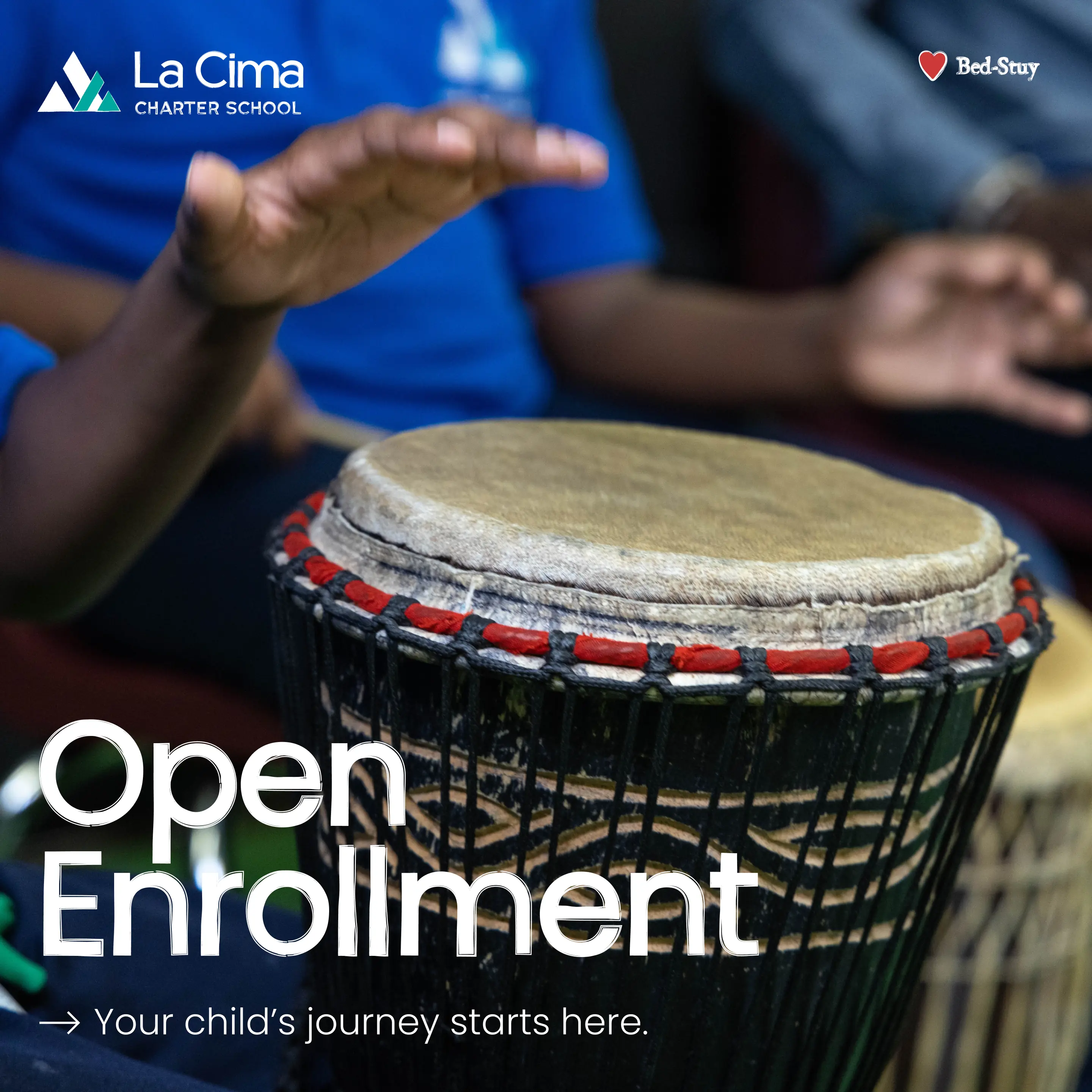
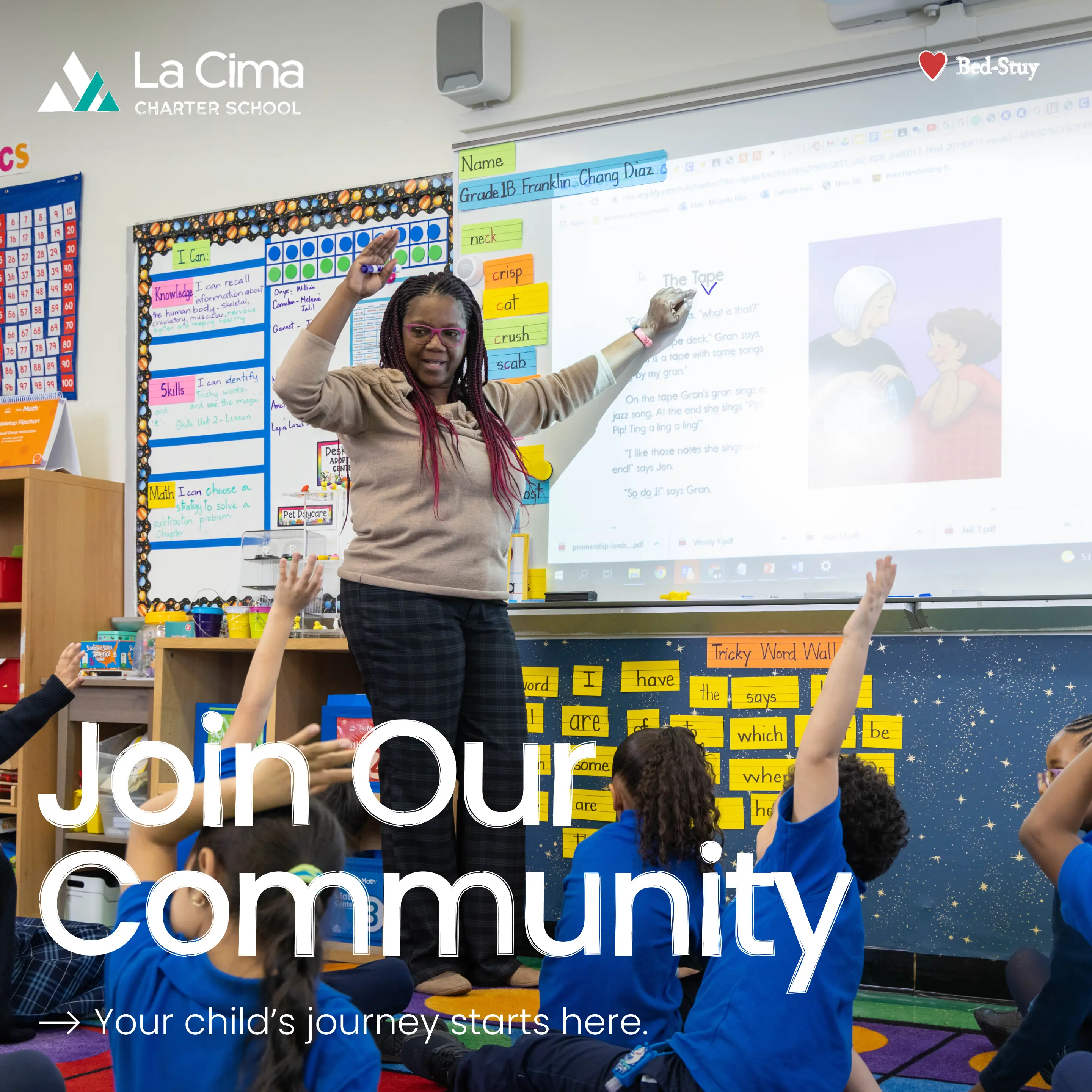
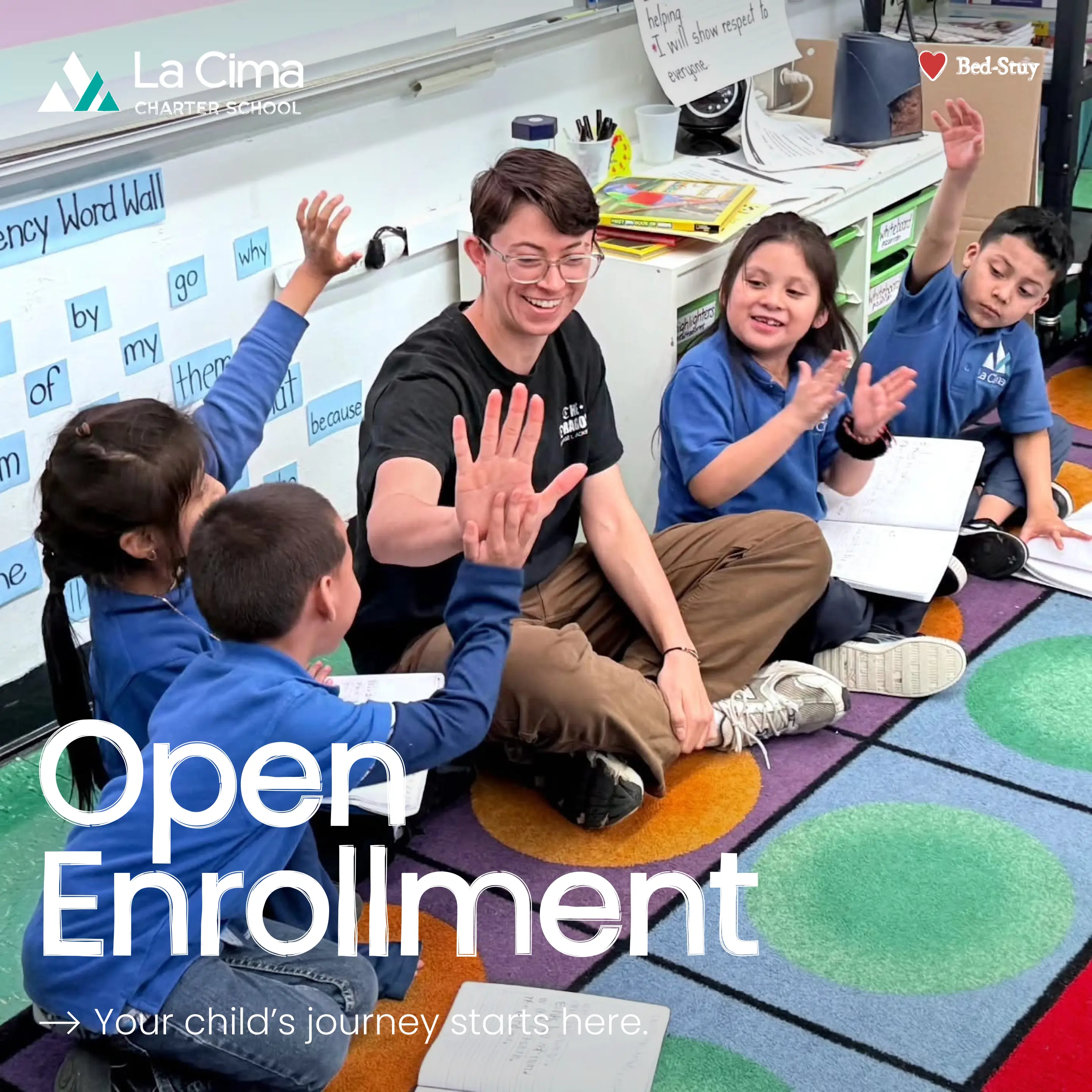
I designed a 28-day test flight: new creative, audiences defined and targeted by geography and parental demographics, and a single clear objective — link clicks to the admissions page. CPC rose modestly, from around $0.49 to $0.59, which was expected and worth it: we were reaching qualified prospective families instead of recirculating the same warm audience. In four weeks the campaign delivered roughly 3,700 clicks and 228,000 impressions. Daily clicks more than doubled, daily reach tripled, and daily impressions nearly quadrupled compared to the prior boosted-post baseline.
Outcome
Choosing Squarespace over a custom build was the right call for this client. It gave us a faster path to a stable, maintainable product, and that's what the school actually needed. And pairing it with a structured paid media strategy meant the site wasn't just compliant and well-designed — it was actually reaching the families it was built for. The test flight made the case, internally, for treating paid media as a real function rather than an afterthought.
Summary
Working directly with La Cima's Executive Director and school leadership, I led a full overhaul of the school's website, social media presence, and brand identity. I interviewed staff and teachers to surface the school's most pressing needs — keeping legally required documents up to date, simplifying content management for non-technical staff, and strengthening admissions outreach — and designed solutions across print and digital platforms to address them. In the latter half of my engagement, I shifted toward a media and marketing strategy, creating targeted ad campaigns delivered through Meta.
www.lacimacharterschool.org - redesigned landing page.
La Cima Charter School — Website Redesign
La Cima Charter School's website hadn't kept pace with the school. Staffing changes meant new administrators didn't know how to update it, admissions content had gone stale, and documents required by New York State law were overdue for revision. On top of those operational problems, the site needed a visual overhaul. I was brought in to fix all of it.
Preliminary Research
I surveyed dozens of school websites and identified two companies that dominate the market: Interactive Schools, which serves private schools across Europe and the U.S., and Educational Networks, a common choice for public school districts. Both offer a full suite of services — CMS, content creation, hosting, analytics, and maintenance. Understanding what the best-resourced solutions were doing gave me a useful benchmark.
Stakeholders
What those successful firms have clearly figured out — and what I needed to figure out quickly — is that a school website serves three distinct audiences, each with different needs. Prospective families carry the weight of a major decision. They want to get a feel for the school — the staff, the students, the environment, the curriculum. The website has to earn their trust and move them toward visiting, applying, and ultimately enrolling. Governing bodies have specific, non-negotiable requirements. Board minutes, complaint forms, and other documentation must be present, organized, and current. For a New York State public school, falling short isn't just a design problem — it's a legal one. Current families use the site as a practical reference. They're looking for staff contact information, arrival and dismissal times, forms, and timely updates about closures or school events. Designing for all three meant the site couldn't optimize for just one. Every structural and content decision had to serve the full range.
Choosing a Platform
My must-haves going in were clear: the site needed to be easy for non-technical staff to maintain, support Spanish translation, meet accessibility standards, have reliable SEO and analytics, and run on secure infrastructure — the old site had been attracting bot traffic that hurt performance. Building from scratch on a JavaScript framework would have met some of those requirements but not all of them, and not within the timeline. Squarespace covered the full list and gave the school something they could actually own and manage after I was gone. I recommended it, the Executive Director approved it without hesitation, and it was the right call.
We launched the new site in December 2025. Staff could now update content without a developer, all New York State compliance documents were in place, and the site supported Spanish translation, accessibility standards, and analytics out of the box. One addition I'm particularly proud of: a scannable "General Information" page that gives parents the answers they need at a glance, before they have to dig into the full scholar handbook. It's a small thing, but it addresses a real friction point — and it's something I noticed was consistently missing from school websites that otherwise got a lot right.
With the site launched, my web design internship with La Cima wrapped up. I returned in the summer of 2025 in a different capacity — focused on outreach and enrollment.
Driving Admissions Traffic
The new site gave the school a credible digital front door, but a front door doesn't help if nobody walks through it. La Cima had been running Meta ads for months — boosting posts from the school's page — and the numbers reflected it. Reach had plateaued, impressions were flat, and the same warm audience was seeing the same content on repeat. With peak enrollment season closing in, I pitched a different approach: stop boosting and start building campaigns from scratch in Ads Manager.
I designed a 28-day test flight: new creative, audiences defined and targeted by geography and parental demographics, and a single clear objective — link clicks to the admissions page. CPC rose modestly, from around $0.49 to $0.59, which was expected and worth it: we were reaching qualified prospective families instead of recirculating the same warm audience. In four weeks the campaign delivered roughly 3,700 clicks and 228,000 impressions. Daily clicks more than doubled, daily reach tripled, and daily impressions nearly quadrupled compared to the prior boosted-post baseline.
Outcome
Choosing Squarespace over a custom build was the right call for this client. It gave us a faster path to a stable, maintainable product, and that's what the school actually needed. And pairing it with a structured paid media strategy meant the site wasn't just compliant and well-designed — it was actually reaching the families it was built for. The test flight made the case, internally, for treating paid media as a real function rather than an afterthought.